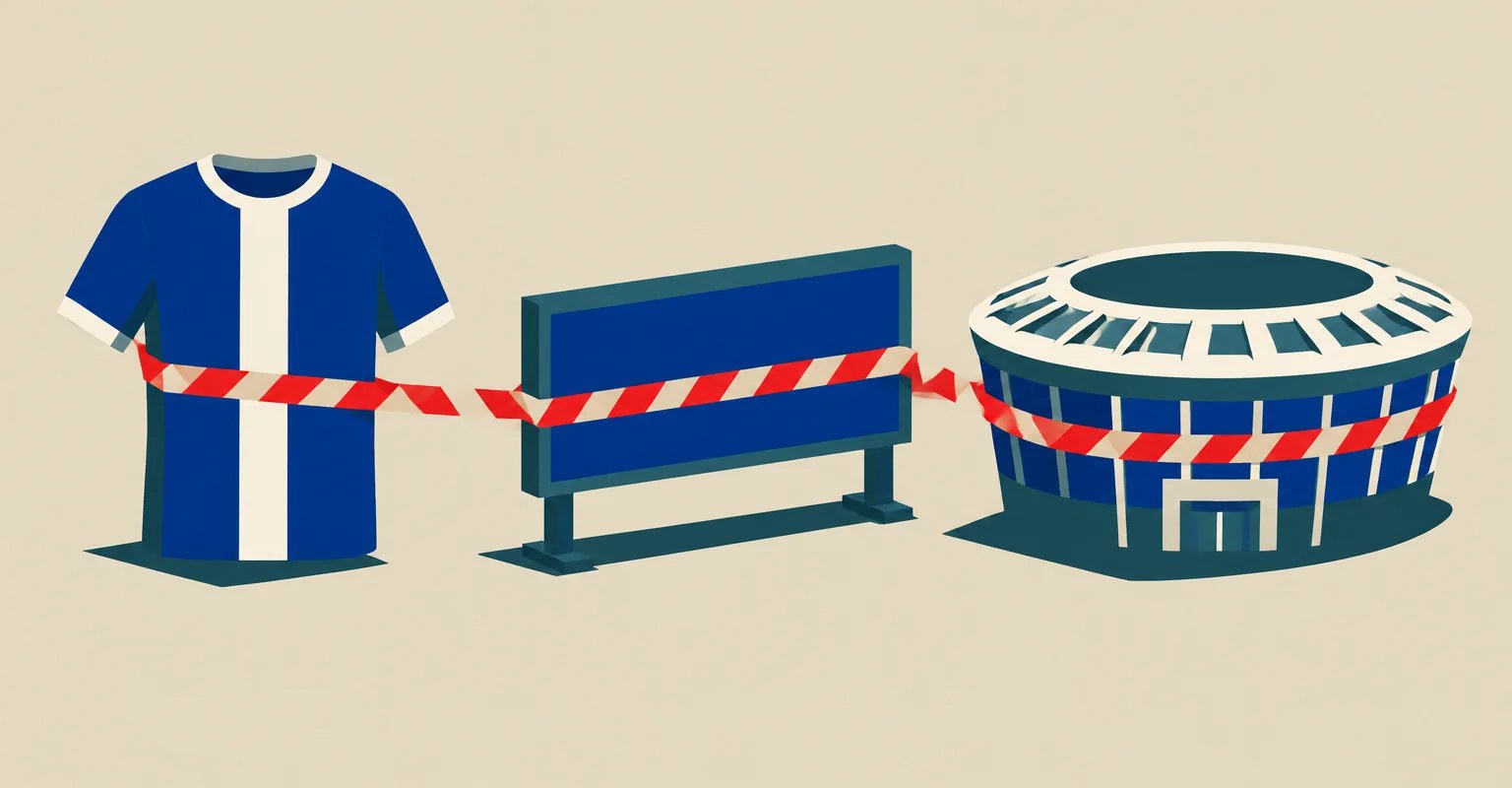
The UK government has launched an eight-week consultation on a plan to ban sponsorship and advertising deals with gambling operators that do not hold a Gambling Commission licence. Under the proposal, continuing to promote those brands in Great Britain would become a criminal offence, with the ban aimed at physical forms of sponsorship and advertising such as kit deals, pitch-side billboards, tournament programmes, venue infrastructure and naming rights.
The move comes after months of delay. The Guardian reported last week that progress had stalled since February, when the Department for Culture, Media and Sport said a review would begin in the spring. In early June, Entain chief executive Stella David wrote to gambling minister Baroness Twycross warning that sponsorship agreements with unlicensed firms were “surely now being finalised”.
Current law leaves a gap. Businesses can enter advertising and sponsorship arrangements with gambling operators that are not licensed in Britain if those operators block access to their services from consumers in Great Britain. The government says unlicensed sites often use geo-blocking, but that the restriction can be bypassed with VPNs, allowing brands to remain visible to British audiences.
Ministers say the purpose is to protect consumers, preserve the integrity of the Great Britain gambling market and reduce money-laundering and crime risks. The consultation says the ban should apply across all sectors and at all levels, including grassroots sport, so that other industries do not simply replace sport as an outlet for unlicensed sponsorship.
The Gambling Commission has already warned sports organisations that entering such arrangements can put them at serious risk of committing an offence under section 330 of the Gambling Act 2005. It has also said that officers may face prosecution in some circumstances, and that blocking measures can be circumvented, making ongoing monitoring essential.
The consultation also uses the white-label model as part of its background. White labelling is a lawful arrangement in which a Gambling Commission-licensed operator offers remote gambling under a third-party brand, and the government says this is often used in sport, especially by overseas brands seeking to sponsor high-profile football clubs. It cites TGP Europe, which held a licence from November 2014 to May 2025, when the commission found it was failing to carry out sufficient checks on business partners and breaching anti-money-laundering rules.
TGP Europe surrendered its licence and left the British market in May 2025, leaving its overseas white-label partners unlicensed in Great Britain and their partnered football clubs exposed to the risk of advertising unlawful gambling. The consultation says that episode exposed a legislative gap that still allows clubs to keep sponsorships with unlicensed operators so long as those operators are not accessible to British consumers.
That backdrop has already touched top-flight football. The Guardian reported that Everton signed a three-year sleeve sponsorship deal with Stake.com within weeks of the warning from Entain, despite Gambling Commission guidance urging clubs to think twice before pursuing such arrangements. Stake does not take bets in the UK.
The government’s preferred option is to bring the ban into force in August 2027, ahead of the 2027/28 football season, in order to limit commercial disruption and give firms time to secure replacements. Gaming Intelligence reported that the consultation opened on 15 July and closes on 9 September.