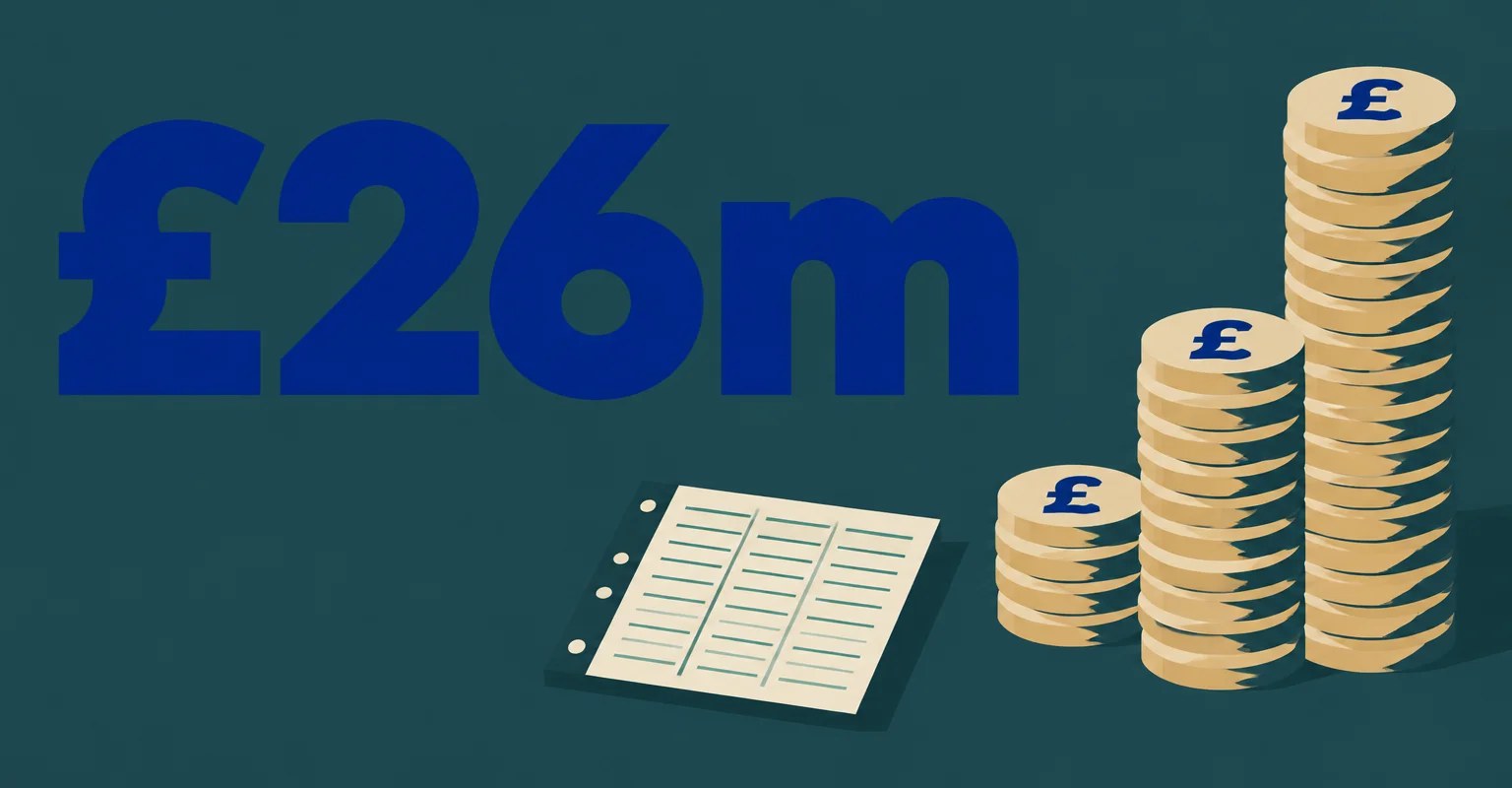
The UK government has committed £26 million over three years to expand the Gambling Commission’s work against illegal gambling, with the first £7 million made available in April. Acting chief executive Sarah Gardner made the announcement at the International Association of Gaming Regulators conference in Lima on Oct. 20.
Gardner said the money would build on an approach the regulator had spent two years developing, increasing its operational capacity and scaling activity against unlicensed operators. Before the additional funding, limited resources meant the Commission had to concentrate on cases presenting the greatest risks and potential impact.
Illegal-market cases can demand more resources than supervision of licensed businesses because operators seek to avoid authorities and investigations may result in prosecutions. Gardner cited the Futgalaxy case, which produced convictions for providing unlicensed gambling to children and consumed a significant share of the Commission’s resources over the period needed to secure them.
The regulator’s aim is to make it harder for illegal gambling to operate at scale in Great Britain, rather than to eliminate every unlawful website or unlicensed premises in the near term. Its 2026-27 business plan says the Exchequer funding will augment existing disruption activity and support a strategy to prevent unlicensed operators operating at scale.
In the 2025-26 financial year, the Commission issued 741 cease-and-desist notices to advertisers and operators. It reported about 397,500 URLs to search engines, with roughly 266,700 removed during the year; it also referred 1,068 websites for delisting and disrupted 1,134 sites through takedowns or geo-blocking.
The Commission uses an identification tool that combines automated Google searches with Similarweb traffic estimates to help teams rank the most prolific illegal sites. Its monthly updated Power BI report supports disruption activity involving an average of 100 sites a month.
Partnerships are central to the enforcement strategy. The Commission works with search providers, hosting companies, payment firms, operators, regulators, government bodies and law-enforcement agencies. Its business plan identifies continued engagement with the Department for Culture, Media and Sport, the government’s Illegal Gambling Taskforce, industry, finance and social-media stakeholders as a priority.
The regulator has developed payment-blocking referrals involving Visa and intends to extend that approach to Mastercard and potentially digital wallets. It also leads an IAGR working group that has established bilateral regulatory relationships for joint action, including a project with the Netherlands’ Kansspelautoriteit on unlicensed websites targeting both countries.
Gardner said new powers are expected to allow the Commission to seek court orders suspending IP addresses and domain names. The 2026-27 plan is the third and final year of the Commission’s corporate strategy, “Gambling Regulation in a Digital Age.”
The enforcement push is taking place in a large regulated market. As this publication reported in September, Great Britain’s regulated gambling sector generated £17.5 billion in gross gambling yield in the year to March, a 4.4% annual increase; remote betting, casino and bingo accounted for £8.3 billion of that total.