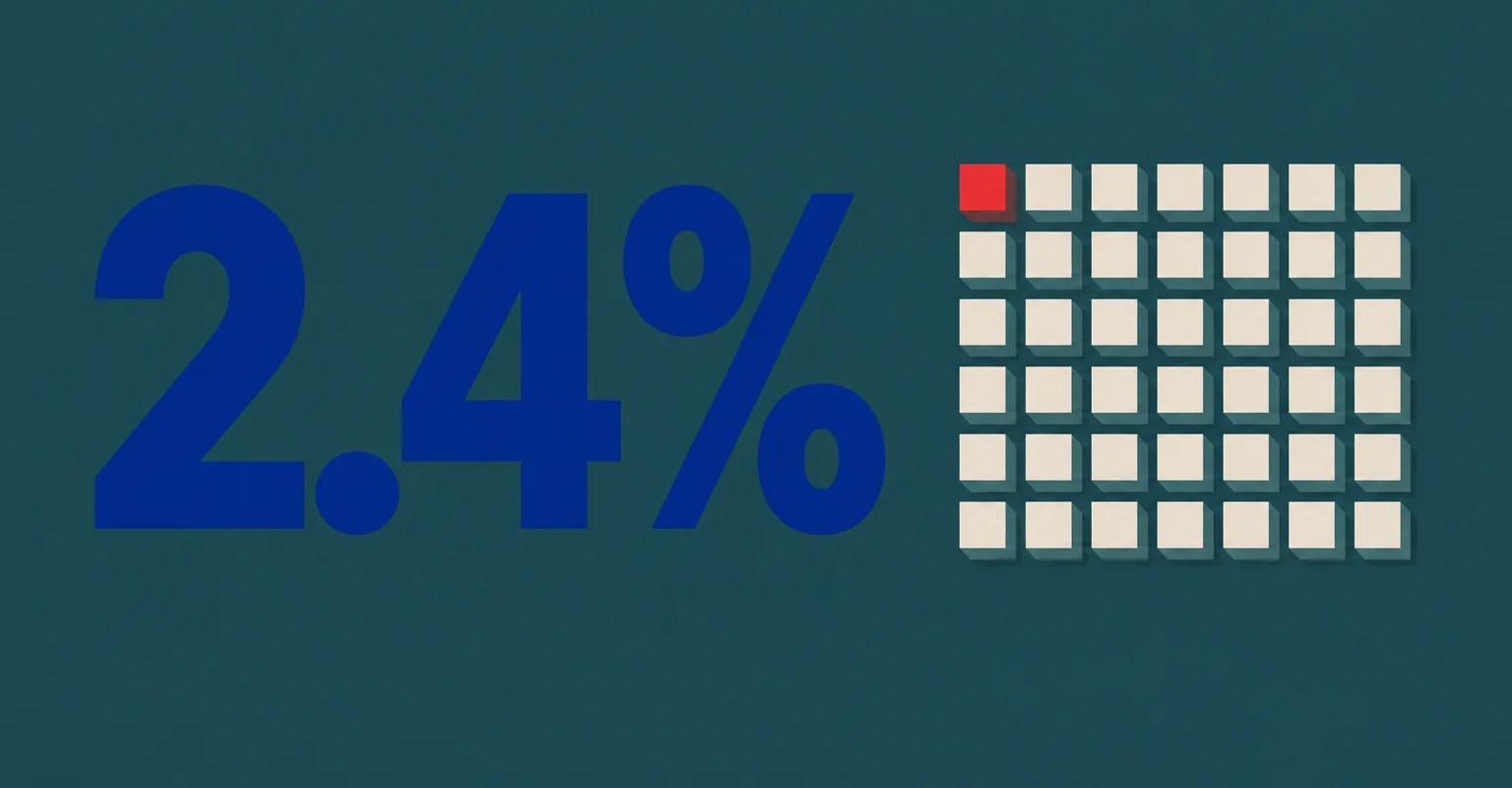
The Gambling Commission’s third Gambling Survey for Great Britain put the share of adults with a Problem Gambling Severity Index score of 8 or more at 2.4%, down from 2.7% in the previous survey and 2.5% in the first survey published in 2024. The report estimated that about 1.3 million adults in Great Britain scored in that range in 2025.
The PGSI is a nine-item scale running from 0 to 27, used to measure both behavioural symptoms of gambling disorder and some of the harms linked to it. The Commission’s consequences report says gambling can affect not only the person who gambles, but also family, friends and wider social networks.
Overall participation was broadly steady. In 2025, 59% of adults aged 18 and over said they had gambled in the previous 12 months, which the Commission puts at about 31 million people, and 47% had gambled in the previous four weeks, or about 25 million. Excluding people who only played lottery draws, the figures were 40% over 12 months and 27% over four weeks, down from 48% in the previous published four-week result.
Men were more likely than women to gamble in the past four weeks, at 51% versus 44%, and 30% of men versus 24% of women gambled on something other than lottery draws alone. The most active age groups in the four-week measure were adults aged 45 to 54 and 55 to 64, while those aged 18 to 24 were least likely to have taken part. Excluding lottery-only players, participation was highest among 25 to 44-year-olds and lowest among those aged 75 and over.
The consequences report said 2.7% of adults who had gambled in the past 12 months experienced one or more severe consequence from their own gambling. Relationship breakdown was the most commonly reported severe consequence, at 1.7%, and 3.4% of past-year gamblers said they had sought support because of their own gambling. Seeking support rose from 0.8% among those with a PGSI score of 0 to 47.3% among those scoring 8 or more.
The effect on affected others was also clear. Some 43.2% of all participants said someone close to them gambled, even if only occasionally, and 4.8% of that group said they had experienced one or more severe consequences from someone else’s gambling. Relationship breakdown was again the most common severe consequence, at 3.3%, and 3.3% of those affected had sought support.
The report also recorded distress linked to suicidality. About 11.3% of all participants said they had thought about or attempted taking their own life in the past 12 months, and 4.6% of that group said gambling was related a little or a lot. Among gamblers who reported thoughts or attempts, men were more likely than women to say gambling was involved, at 9.9% versus 4.2%.
In a separate trends report covering 2023 to 2025, the Commission said few differences emerged across most measures and that the pattern was one of stability. It pointed to a rise in gambling among men aged 55 and over on activities other than lotteries, from 27% to 32% over 12 months and from 18% to 22% over four weeks, while help-seeking among adults aged 35 to 54 rose from 2.4% to 3.8%; by contrast, help-seeking due to others’ gambling fell among adults aged 55 and over, from 2.3% to 1.1%, and among women in that age group, from 2.9% to 1.2%.
The Office for Statistics Regulation said GSGB statistics provide frequent, timely and comprehensive coverage, but that direct comparisons with other gambling surveys should not be used because methods differ. The Commission launched the series after a four-year development programme and began publishing official statistics in February 2024. Additional GSGB-based reports are expected later in the year.