The UK government has rejected a House of Lords call for a comprehensive ban on gambling advertising, arguing that licensed operators should be able to market their services responsibly and that a blanket prohibition could direct consumers towards unregulated sites.
In its response to the Liaison Committee’s Gambling Harm: Time for Action report, ministers said an all-encompassing ban would be neither proportionate nor effective. They acknowledged that advertising can influence behaviour and contribute to gambling-related harm, but said a widespread restriction would not be targeted at those most vulnerable to harm, including young people.
The government also said a ban could reduce the visibility of legitimate operators, make it harder for consumers to distinguish them from unlicensed businesses and have knock-on effects on sectors supported by advertising. It rejected the committee’s view that reducing harm could not be reconciled with supporting growth in the gambling industry, pointing to the licensed sector’s jobs, tax contributions and sports sponsorship.
The decision answered the proposal published by the Lords committee on Sept. 17, as reported at the time, that a comprehensive advertising prohibition was the most effective way to reduce gambling harm.
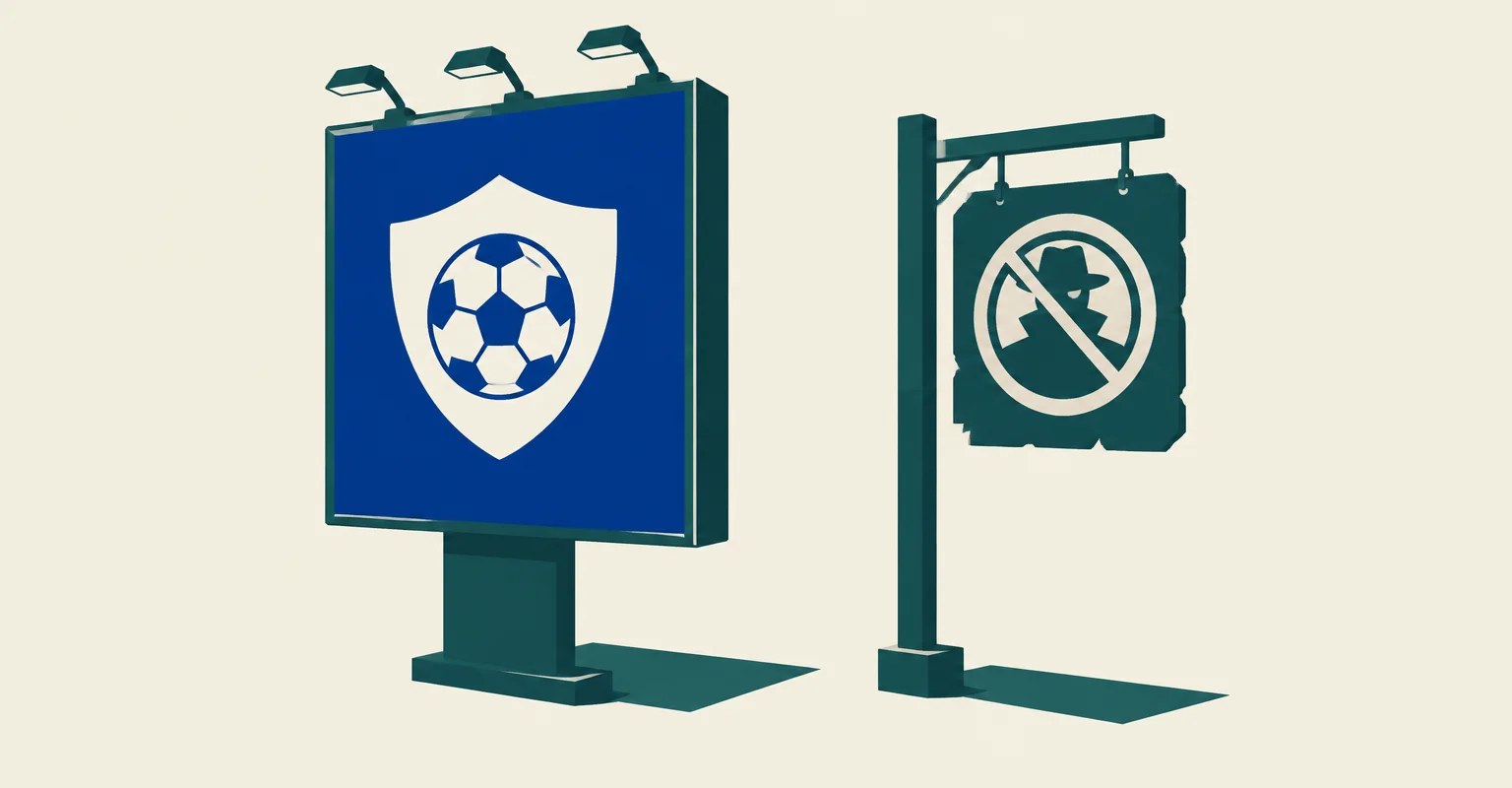
Ministers and the Gambling Commission did, however, accept a recommendation to consider a clear kitemark on licensed operators’ advertising. The Commission will explore a mark that unlicensed operators could not easily reproduce, intended to help consumers recognise businesses holding a Great Britain licence.
Licensed operators must already display the Gambling Commission logo and licence number clearly on their websites and apps. The Commission will also continue examining consumer awareness of the illegal market and possible interventions, while the government supports expanding the Illegal Gambling Taskforce’s work amid concern that unlicensed operators appear in search results and on social media.
The government rejected a proposal for a single statutory gambling-advertising regulator. It defended the existing co-regulatory system, in which the Advertising Standards Authority administers the CAP Code for non-broadcast advertising and the BCAP Code for broadcast advertising, alongside the Gambling Commission’s rules. The Commission said replacing that structure would require primary legislation, substantial additional resources and funding, and would not be necessary or proportionate.
There may nevertheless be a legislative change to online-advertising powers. The government agreed that primary legislation should remove the limitation in Section 333(6) of the Gambling Act 2005, which restricts the Secretary of State’s use of delegated powers under Section 328 to regulate online gambling advertising. It said it would act once a suitable legislative vehicle and parliamentary time were available.
Ministers also declined proposals for further sponsorship restrictions below Premier League level, limits on training-kit sponsorship, broader watershed or online-advertising curbs, a ban on the term “free bet” and a licensing regime for gambling affiliates. They remained open to tighter controls on cross-selling and promotion of higher-risk products, and supported wider information-sharing among operators, regulators, government departments and researchers.
The government’s 2023 white paper said advertising had expanded into new channels since the Gambling Act came into force and could disproportionately affect people experiencing gambling problems. The white paper said operators should use technology to keep online advertising away from children and vulnerable people, while the Commission had already tightened rules on VIP schemes and marketing to people displaying significant indicators of harm.
The government said it would continue assessing evidence on gambling advertising and take further action where warranted.